
Who is Lisa Kiss
Long before I ever picked up a paintbrush, I was playing in my mother's scarf drawer, imagining I'd grow up to be the next Vera. That childhood dream turned into a lifetime of studying and making art, with one motivation that's never changed — making art people could wear anywhere, and pass down to their daughters.
I first apprenticed under a protégé of Norman Rockwell in the Old Masters tradition of drawing and painting from age 14–18, then studied painting and art history at Washington University in St. Louis. A class in painting on fabric at Penland School of Craft led me right back to that childhood dream, and to my life's work.
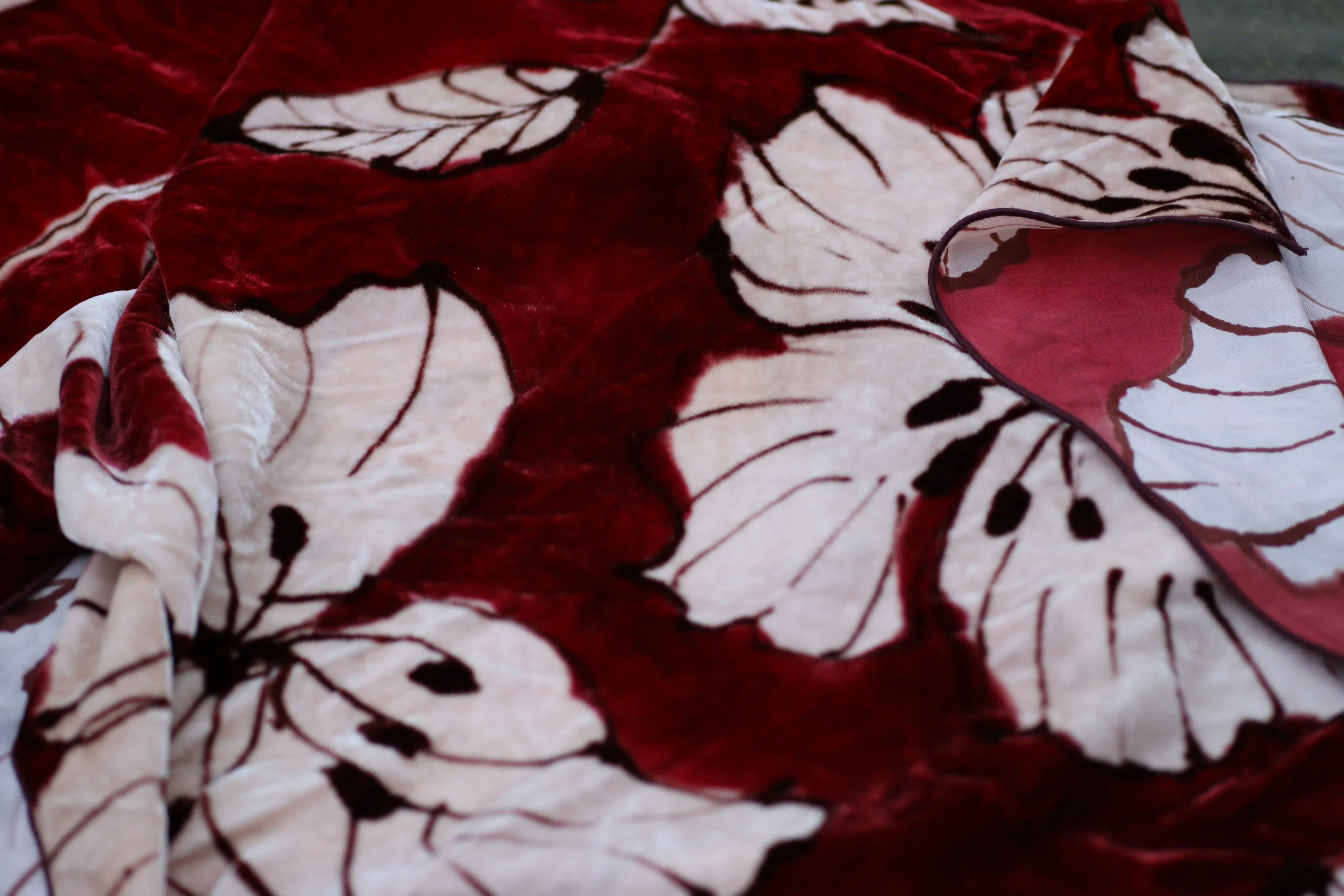
For 17 years, I ran a studio in Lower Manhattan, where I painted directly onto velvet using Harite and Shinshi, an ancient Japanese stretching technique (described below) traditionally used for kimono fabric, under the name Lisa L. The velvet scarves were carried at Barneys, Nordstrom, and over 200 stores nationally and internationally, with a feature bio in Women's Wear Daily. After losing that studio — and my full press archive — on 9/11, I moved to the East End of Long Island and paused for 17 years to raise my two daughters — then returned in 2018–2025, selling a new collection under the name Lisa Kiss at the Grand Central Holiday Market.
I still begin every design as an original painting or drawing, but now the final designs are printed overseas onto the silk & velvet. The cashmere is hand-painted by artisans in Jaipur, India. That same artwork now also lives on matching silk pet bandana sets for you and your dog, under the name Fetching by Lisa Kiss.
Every scarf starts as my own original artwork, not a licensed print or a factory design. When you buy a Lisa Kiss scarf, you're not buying an accessory off a shelf — you're wearing an original, from an artist with a long, proven history — forty years and counting.
I still remember my mother's scarf drawer. Now, I hope one of my scarves finds a place in yours — for your mother, your daughter, or yourself.
A bit about the ancient Japanese technique I was using for many years to paint the velvet scarves.
Each “run” of fabric, measuring 9 yards long, begins as a blank white canvas. Using an ancient Japanese method of stretching fabric with “Harite” clamps and “Shinshi” bamboo tension bars—a process used to paint fabrics for Kimonos.
After the painting is complete, a drying period and a series of rinses allow the dye to set, preventing any future color bleed and ensures that the fabric remains bold and bright for many years to come. The full process can take up to four days to produce a finished scarf, depending on the complexity of the design.
FAQ's
-
All our Velvets are painted and sewn in her Sag Harbor studio. Scroll to the next section to see a video of our velvet production and read more about the ancient dying technique we use.
Our Cashmere collection was first designed in Sag Harbor, then reproduced by painters in Jaipur, India.
Our Silk collection designs were first designed in Sag Harbor, then printed on Mulberry silks in China & Italy. -
The best way to stay in the know on new designs and drops is by signing up for our email list and/or following us on Instagram at @lisakiss.ny or @fetching.lisakiss
Subscribers will get early access to new drops, exclusive sales featuring archived designs, and invites to our in-person shopping pop-ups and events. -
We release new designs in small batches seasonally. If you want early access to new drops, be sure to subscribe to our email list.
-
Because we only release our designs in limited batches, old designs will be archived.
How can I shop old designs?
We will host online and/or in-person archive sales infrequently throughout the year, where customers can shop archived styles that we still have remaining stock of. To esnure you hear about these sales when they come along, subscribe to our newsletter to get first access. -
If you would like to exchange or return your new, unworn scarf—we are happy to offer a refund minus a $10 restocking fee. Returns must be delivered to our studio within 30 days of the delivery date.
If you would like to exchange your scarf, you must return your new, unworn product and purchase your new piece as a new transaction.
Customers are responsible for shipping cost on returns. Please contact us at info@lisakiss.net to initiate your return.
-
Designs may not be available in every size. Depending on the product, you will find a range of the following sizes per fabric type:
Cashmere
Oblong — 27” x 80”
Square — 26” x 26”
Silk
Small Square — 20” x 20”
Large Square — 36” x 36”
-
Silk & Cashmere: You can hand wash these in a gentle soap in the sink. Hang dry. To address any wrinkles, we recommend only steaming your silk and cashmere Lisa Kiss scarves.
For your archived Velvets; When you’d like to clean your velvet scarf, you can hand wash with gentle soap and then put it in the dryer to fluff it back up (we’re serious!)—all our velvet scarves have already been set in the machine so it will not harm them. Do not iron, only steam.
-
ABSOLUTELY! Lisa loves to work with your suggestions if you have a special design or inspiration in mind that you’d like to have custom made for an event? Perhaps you’re looking for a unique, artisanal gift for a group or event attendees? We can provide bespoke designs and work with you on the product you have in mind. The minimum on custom designs would start at 30 pieces per pattern. But at a very affordable price per item. Reach out to us at info@lisakiss.net for more info. We would love to work with you!
-
Email us at info@lisakiss.net, send us a message on Instagram via @lisakiss.ny, or submit a form on our contact page <3.